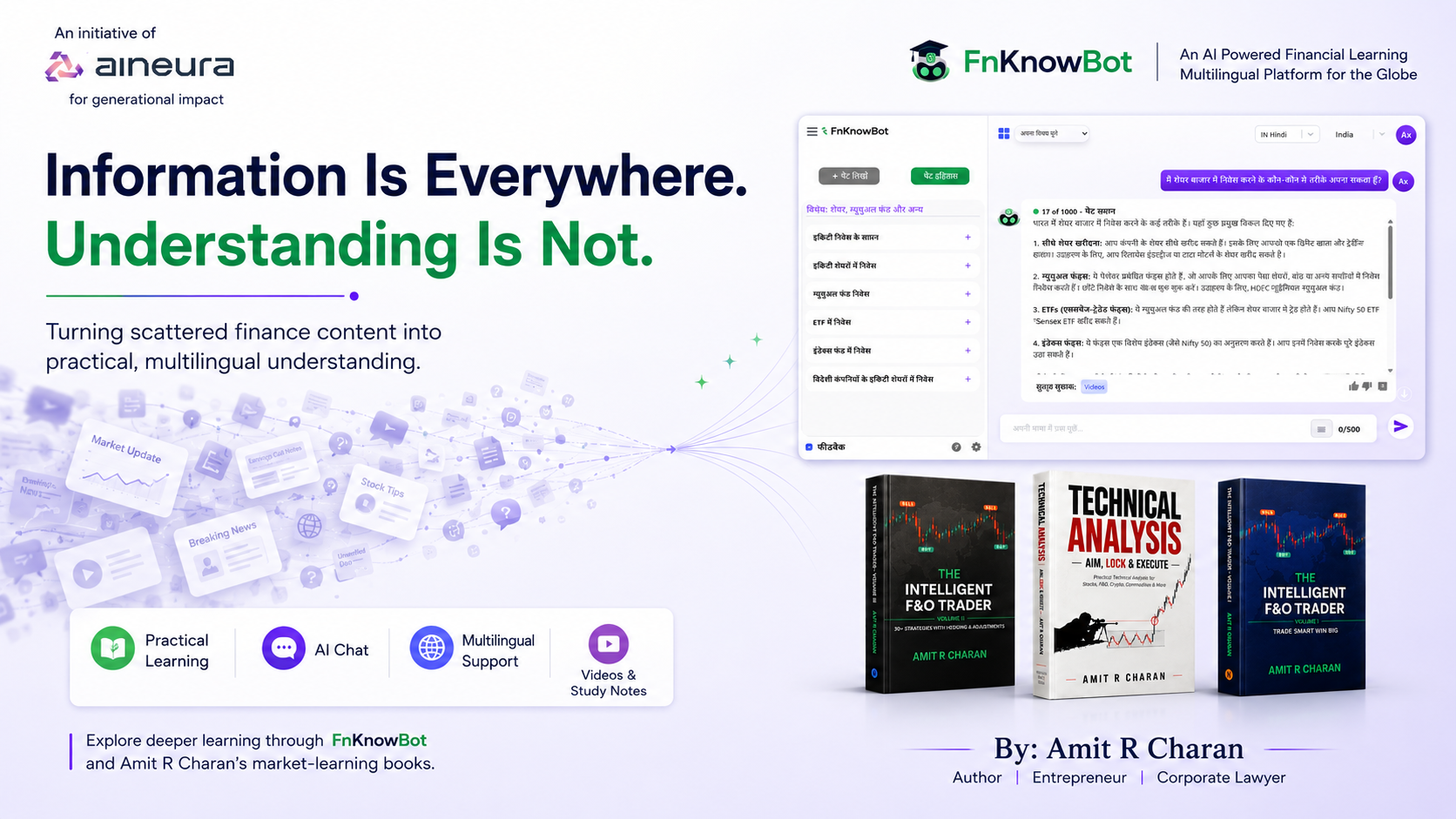
𝐈𝐧𝐟𝐨𝐫𝐦𝐚𝐭𝐢𝐨𝐧 𝐈𝐬 𝐄𝐯𝐞𝐫𝐲𝐰𝐡𝐞𝐫𝐞. 𝐔𝐧𝐝𝐞𝐫𝐬𝐭𝐚𝐧𝐝𝐢𝐧𝐠 𝐈𝐬 𝐍𝐨𝐭.
By: Amit R Charan
We live in an age where information is available everywhere.
A person can search online, watch videos, read articles, follow influencers, join courses, ask questions on forums, and consume endless content on almost any topic. Yet, despite this abundance of information, many people still struggle to truly understand important subjects that affect their lives, careers, finances, livelihood, and future.
The problem today is no longer only lack of information. The deeper problem is lack of structured, simplified, practical, and accessible understanding.
🌐 𝐓𝐡𝐞 𝐑𝐞𝐚𝐥 𝐂𝐡𝐚𝐥𝐥𝐞𝐧𝐠𝐞: 𝐂𝐨𝐧𝐭𝐞𝐧𝐭 𝐎𝐯𝐞𝐫𝐥𝐨𝐚𝐝
The internet has made content widely available. But availability does not always mean clarity.
For many learners, online knowledge often feels:
• Scattered across too many platforms;
• Difficult to organize into a learning path;
• Filled with jargon and technical language;
• Heavily dependent on English-first explanations;
• Too theoretical and not connected to real-life use;
• Confusing for beginners who do not know where to start.
This creates a strange situation. People may have access to information, but not always access to understanding.
💡 𝐈𝐧𝐟𝐨𝐫𝐦𝐚𝐭𝐢𝐨𝐧 𝐈𝐬 𝐍𝐨𝐭 𝐭𝐡𝐞 𝐒𝐚𝐦𝐞 𝐚𝐬 𝐔𝐧𝐝𝐞𝐫𝐬𝐭𝐚𝐧𝐝𝐢𝐧𝐠
Information tells us what exists. Understanding helps us make sense of it.
A person may read about budgeting, investing, insurance, loans, mutual funds, stock markets, retirement planning, AI, entrepreneurship, or digital skills. But if the explanation is not simple, structured, practical, and relatable, the learner may still remain uncertain.
This is especially true in financial learning. A beginner may find hundreds of articles on investing, but still not understand risk. A young professional may watch videos on mutual funds, but still remain unsure about asset allocation. A trader may read about chart patterns, but still not understand market behaviour, discipline, or risk management.
Understanding requires more than content. It requires context, simplicity, structure, language comfort, and the ability to ask questions freely.
🗣️ 𝐋𝐚𝐧𝐠𝐮𝐚𝐠𝐞 𝐂𝐚𝐧 𝐁𝐞 𝐚 𝐁𝐚𝐫𝐫𝐢𝐞𝐫 𝐭𝐨 𝐔𝐧𝐝𝐞𝐫𝐬𝐭𝐚𝐧𝐝𝐢𝐧𝐠
Many learners do not struggle because they lack intelligence. They struggle because knowledge is often delivered in a language or style that does not feel natural to them.
When complex subjects are explained only in English, or in highly technical vocabulary, large sections of society may be left behind despite having digital access.
True digital inclusion therefore requires more than internet access. It requires knowledge to be available in the learner’s own language, in a format they can understand, and in a manner they can apply.
Language is not merely a translation feature. It is a bridge between information and confidence.
🤖 𝐖𝐡𝐲 𝐀𝐈 𝐂𝐚𝐧 𝐁𝐞𝐜𝐨𝐦𝐞 𝐚 𝐁𝐫𝐢𝐝𝐠𝐞
AI has the potential to change how people learn because it can make learning more conversational, personalized, and accessible.
Instead of only consuming fixed content, learners can ask follow-up questions. They can ask the same concept in simpler words. They can explore topics at their own pace. They can learn without hesitation. They can move from confusion to clarity through interaction.
This is important because many people hesitate to ask basic questions in public, especially around finance, markets, technology, business, livelihood, or career skills. AI-powered learning can create a private, patient, and always-available learning environment.
The future of learning may not only be content-based. It may increasingly become conversational, multilingual, self-paced, practical, and guided by real understanding.
📘 𝐅𝐫𝐨𝐦 𝐈𝐧𝐟𝐨𝐫𝐦𝐚𝐭𝐢𝐨𝐧 𝐭𝐨 𝐏𝐫𝐚𝐜𝐭𝐢𝐜𝐚𝐥 𝐊𝐧𝐨𝐰𝐥𝐞𝐝𝐠𝐞
The real need today is not just more content. The real need is practical knowledge that people can use.
Good learning should help people:
• Understand concepts without unnecessary complexity;
• Learn in their own language and at their own pace;
• Connect theory with real-life decisions;
• Ask questions without fear or hesitation;
• Follow structured topics instead of scattered content;
• Build confidence before making important decisions.
This kind of learning is especially important for personal finance, investing, stock market learning, livelihood skills, entrepreneurship, AI adoption, and digital capability building.
📈 𝐒𝐢𝐦𝐩𝐥𝐢𝐟𝐲𝐢𝐧𝐠 𝐂𝐨𝐦𝐩𝐥𝐞𝐱 𝐒𝐭𝐨𝐜𝐤 𝐌𝐚𝐫𝐤𝐞𝐭 𝐋𝐞𝐚𝐫𝐧𝐢𝐧𝐠
One area where the gap between information and understanding is clearly visible is stock market learning.
Investors and traders often find large amounts of information online about stocks, charts, F&O, technical indicators, fundamental analysis, cryptocurrency, ETFs, REITs, foreign equities, trading strategies, and market behaviour. Yet, for many learners, the real challenge is understanding these subjects in a simple, structured, practical, and risk-aware manner.
Through his books, Amit R Charan has been contributing toward simplified learning of complex stock market concepts for investors and traders. His books on Technical Analysis and F&O are aimed at helping learners move beyond scattered market noise toward more structured market understanding.
Learners can explore Amit’s market learning books here:
• Technical Analysis: Aim, Lock & Execute;
• The Intelligent F&O Trader – Volume I;
• The Intelligent F&O Trader – Volume II.
These knowledge materials reflect the same broader idea: complex financial subjects should be explained in a manner that is practical, simplified, and useful for real learners.
🌱 𝐊𝐧𝐨𝐰𝐥𝐞𝐝𝐠𝐞 𝐈𝐧𝐜𝐥𝐮𝐬𝐢𝐨𝐧 𝐟𝐨𝐫 𝐁𝐫𝐨𝐚𝐝𝐞𝐫 𝐄𝐦𝐩𝐨𝐰𝐞𝐫𝐦𝐞𝐧𝐭
Inclusion should not be limited to access to devices or internet connectivity. Real inclusion happens when people can understand, participate, decide, and grow.
If knowledge remains complex, expensive, English-heavy, or scattered, many people may remain digitally connected but practically excluded.
Knowledge inclusion means making learning reachable, usable, and actionable for individuals, families, students, professionals, entrepreneurs, seniors, workers, and communities.
This is where AI-powered multilingual learning can support deeper digital inclusion, capability building, and social impact.
🌐 𝐇𝐨𝐰 𝐅𝐧𝐊𝐧𝐨𝐰𝐁𝐨𝐭 𝐅𝐢𝐭𝐬 𝐢𝐧𝐭𝐨 𝐓𝐡𝐢𝐬 𝐕𝐢𝐬𝐢𝐨𝐧
FnKnowBot, developed by Aineura, is being built around this larger idea: to help convert scattered financial information into simplified, practical, multilingual, and usable understanding.
The platform supports AI-powered learning through chat-based explanations, pre-built questions, structured topics, study support, and video-assisted learning. This helps learners explore financial concepts at their own pace, in their preferred language, and without hesitation.
Through FnKnowBot, learners can further explore the full spectrum of personal finance and market learning, including:
• Fundamental Analysis;
• Technical Analysis;
• Indian equity investment and trading;
• Foreign equity shares and global market learning;
• Mutual funds, ETFs, REITs and index funds;
• Cryptocurrency awareness;
• F&O trading concepts and strategies;
• Broader investing and trading concepts;
• Loans, insurance, budgeting, retirement planning and other personal finance topics.
In this way, Amit’s books and FnKnowBot support the same larger purpose from different angles. The books provide structured knowledge material, while FnKnowBot helps learners continue exploring, asking, revising, and understanding financial concepts through AI-powered, multilingual, video-supported learning.
The aim is not just to provide more content. The aim is to make financial learning more practical, accessible, interesting, and impactful.
💡 𝐓𝐡𝐞 𝐍𝐞𝐱𝐭 𝐂𝐡𝐚𝐥𝐥𝐞𝐧𝐠𝐞: 𝐀𝐜𝐜𝐞𝐬𝐬 𝐭𝐨 𝐔𝐧𝐝𝐞𝐫𝐬𝐭𝐚𝐧𝐝𝐢𝐧𝐠
The world does not need information alone. It needs understanding.
It needs learning systems that simplify complexity, respect language diversity, support self-paced growth, reduce hesitation, and convert knowledge into practical capability.
Information may be everywhere. But understanding must still be built intentionally.
That is the opportunity for responsible AI, inclusive learning platforms, and Indian startups building for real-world needs.
Explore simplified financial learning with FnKnowBot.
About the Author: Amit R Charan is the Founder of Aineura, an author, and a corporate lawyer. At Aineura, he is building FnKnowBot as a comprehensive personal finance learning platform leveraging AI to make financial literacy simplified, accessible, interesting, and impactful — for sustainable social impact in India and beyond.